
What Is a Grimoire?
A grimoire is simply:
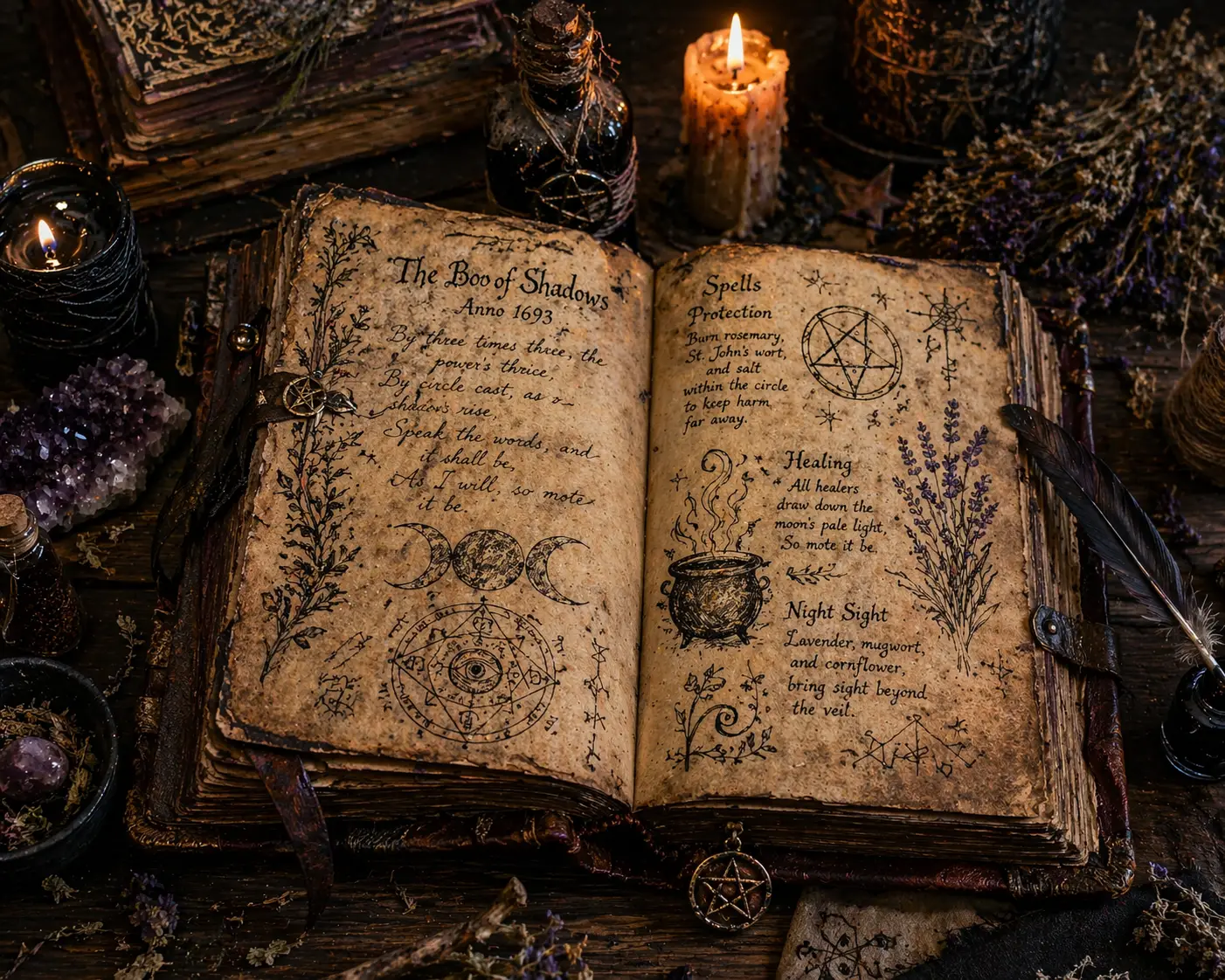
a written collection of knowledge, instructions, or records—often focused on rituals, symbols, or personal practices
Historically, it was a book of instructions, not a mysterious object with power on its own.
The Real History (No Myth Filter)
Grimoires date back centuries, especially in Europe.
They were used by:
- Scholars
- Clergy
- Practitioners of early occult traditions
Famous examples (often referenced today) include:
- The Key of Solomon
- The Lesser Key of Solomon
- Various medieval and Renaissance manuscripts
These books contained:
- Instructions for rituals
- Lists of symbols and names
- Astrological timing
- Prayers or invocations
The key point:
They were manuals, not magical objects.
What a Grimoire Actually Does
In reality, a grimoire:
- Stores information
- Organises ideas and practices
- Acts as a reference or guide
It has no physical effect beyond ink on a page.
Where the “Power” Idea Comes From
The belief that grimoires are powerful objects comes from:
- Secrecy (they were rare and often hidden)
- Religious and cultural fear of forbidden knowledge
- Stories of magic being “contained” in books
Over time, this turned into the idea that:
the book itself holds power
But in practical terms:
- The book doesn’t do anything on its own
- The user’s interpretation and actions are what matter
Modern Grimoires (What They Are Today)
Today, most grimoires are closer to:
- Personal journals
- Creative or reflective notebooks
- Collections of ideas, symbols, or routines
People use them to:
- Track thoughts or intentions
- Record rituals or habits
- Build a sense of identity or practice
Intention & Psychology (The Real Mechanism)
When people say a grimoire is “powerful,” here’s what’s actually happening:
- Writing things down increases focus and clarity
- Re-reading reinforces belief and memory
- Repetition builds habit and meaning
This creates a strong internal effect:
- confidence
- calm
- sense of control
But it’s all happening in the mind, not the book itself.
What Grimoires Do NOT Do
Let’s strip away the myths:
- They do not contain literal magic
- They do not cause external events to happen
- They do not hold energy in a measurable sense
- They do not work without human action and belief
Any “effect” comes from:
how you use the information inside
Why People Still Find Them Powerful
Even without supernatural claims, grimoires can feel meaningful because they:
- Create structure in chaotic thoughts
- Act as a physical anchor for ideas
- Encourage reflection and intention
- Build a sense of personal ritual
They’re less like spellbooks and more like:
a mix between a journal, planner, and creative system
How to Use a Grimoire (Grounded Approach)
1. Record, Don’t Perform
Write:
- ideas
- routines
- thoughts
- patterns
Think of it as building your own reference system.
2. Use It Consistently
The value comes from:
- repetition
- revisiting
- refining
3. Keep It Personal
There’s no “correct” format.
It can include:
- drawings
- lists
- symbols
- reflections
4. Treat It as a Tool
Not something mystical—but something useful.
Is It Worth Having One?
Yes—if you use it properly.
A grimoire is:
A structured way to organise thoughts, habits, and meaning
It’s not magic—but it can be powerful in a psychological and practical way.
Final Thought
The truth is simple:
A grimoire doesn’t hold power.
You do.
The book just helps you:
- focus it
- organise it
- return to it
And that’s where its real value lies.
- grimoire meaning
- what is a grimoire
- grimoire explained
- grimoire vs spellbook
- modern grimoire ideas
- grimoire truth
- how to use a grimoire
- grimoire journal
- witchcraft tools explained
- intentional journaling
- mindfulness writing
- personal ritual tools
- alternative lifestyle UK
- spiritual journal ideas
- cottagecore writing ideas